
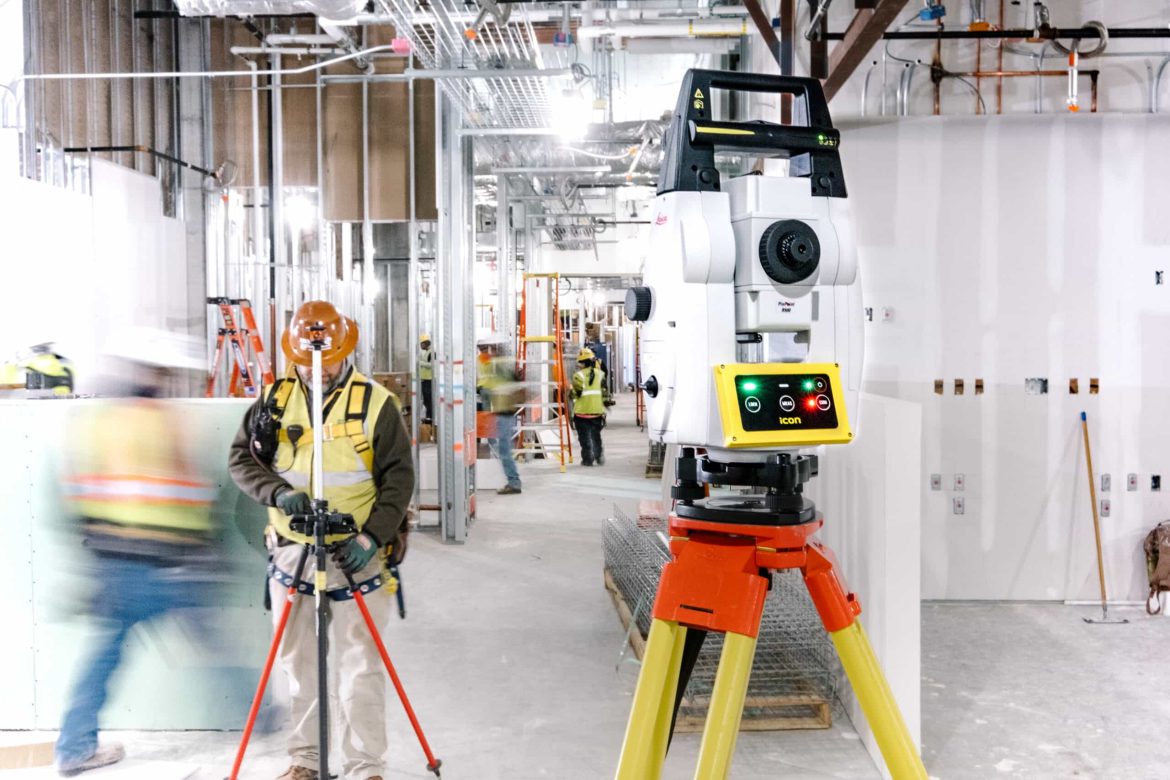
Top Leica iCON Robotic Total Stations for Construction Layout
- April 18, 2026
- 0 Comment(s)
With so many types of surveying tasks required of teams today, it’s no wonder that such a wide range of total stations is available. So, how do you choose the right equipment for construction layout tasks?
Start by considering the level of precision the tasks require, along with the cost of potential rework requests. For most large-scale construction projects and infrastructure jobs today, accuracy requirements can reach the sub-centimeter level.
Given the risk that rework requests can delay work, many construction companies are turning to robotic total stations to provide the accuracy and 3D modeling data they need while requiring less work from their teams.
Leica provides a range of robotic total stations to fit the needs of busy construction companies and engineering firms. The iCON range provides many features essential for construction work, including flexible options for handling large 3D design models in the field and the most stable prism lock technology available from the brand.
If your construction team has been relying on manual total stations for the last few years, it might be time to upgrade. Find the right Leica iCON robotic total station for you with this buyer’s guide.
Understanding Leica iCON Robotic Total Stations
Leica is a pioneer in affordable, durable robotic total stations that deliver advanced features in compact designs capable of withstanding the rigors of busy work sites. But before you invest in a fully robotic model, you need to understand how it will differ from manual models.
Not all construction jobs require the high accuracy and time-saving features provided by a Leica iCON robotic total station. If a manual station is doing a fine job, it’s not necessarily essential to upgrade. Understanding where these devices excel at improving the construction surveying experience will help you decide if it’s the right investment for your team.
What Is a Robotic Total Station?
Much like a manual model, a robotic total station for construction provides essential theodolite functions for measuring horizontal and vertical angles. But instead of requiring manual alignment, robotic stations provide motorized adjustments to eliminate most of the work involved in taking these measurements. Add in a laser distance meter, and you’ve got all the data you need for essential construction tasks from one total station and a solo operator.
Considering the level of equipment and labor required for manual construction surveying, upgrading to a robotic total station could benefit your team. However, you still need to choose the right total station for your budget and needs, ensuring you get essential features without overspending.
Factors for Selecting Leica iCON Robotic Total Stations
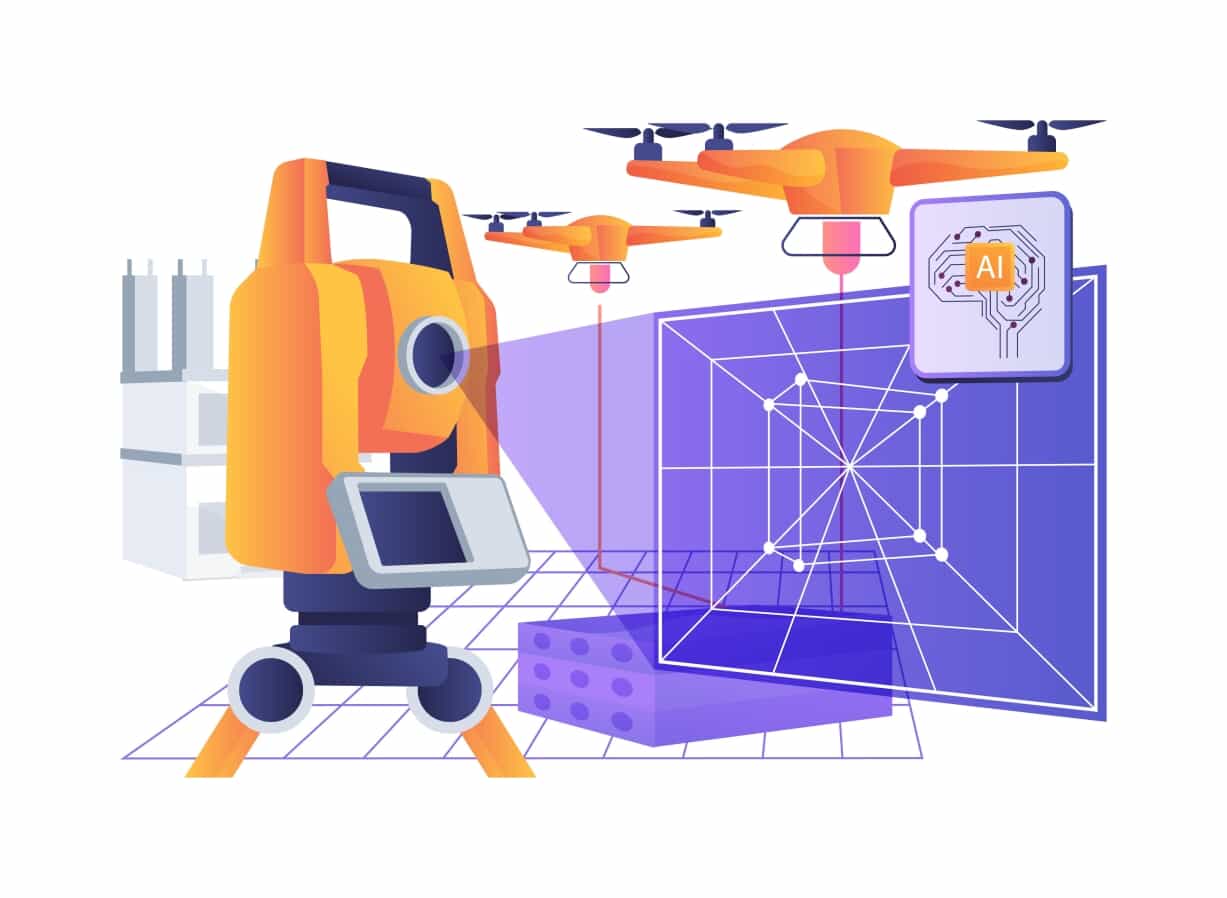
When choosing a specific Leica iCON robotic total station, don’t compare all features equally. Some surveying tools are more applicable than others to the demands of construction site layout. Assess your options based on the factors that really matter for accurate results and ease of operation.
Choosing the Correct Leica iCON Robotic Total Stations
As with most construction technology firms looking to adopt today, no single robotic total station is best for every company. The choice depends on the type of project and workflow requirements. Use the following factors to narrow down your options, from Leica and other total station manufacturers alike:
- Need for a one-person operation to make the most of a small team or reduce labor costs
- Required accuracy level, which is higher with a robotic total station than with a manual model
- 3D modeling and BIM data gathering tasks, which most manual total stations lack the features to handle
- Project scale and complexity, which can increase the risk and cost of rework requests
- The number of points your team needs to record per day, with robotic total stations providing far greater productivity
- Potential for mistakes, which the accuracy level and correction features of the total station can greatly reduce
- Cost per point and per total work day, which affects your bottom line
Advantages and Disadvantages of Robotic Total Stations
While robotic total stations and other advanced Leica construction layout equipment are worth the investment, you should be aware of the few disadvantages before adding them to your workflow. Whether you’re a site engineer handling day-to-day layout or a construction surveyor trying to achieve high precision results, the advantages of these total stations are likely to outweigh any downsides.
Advantages
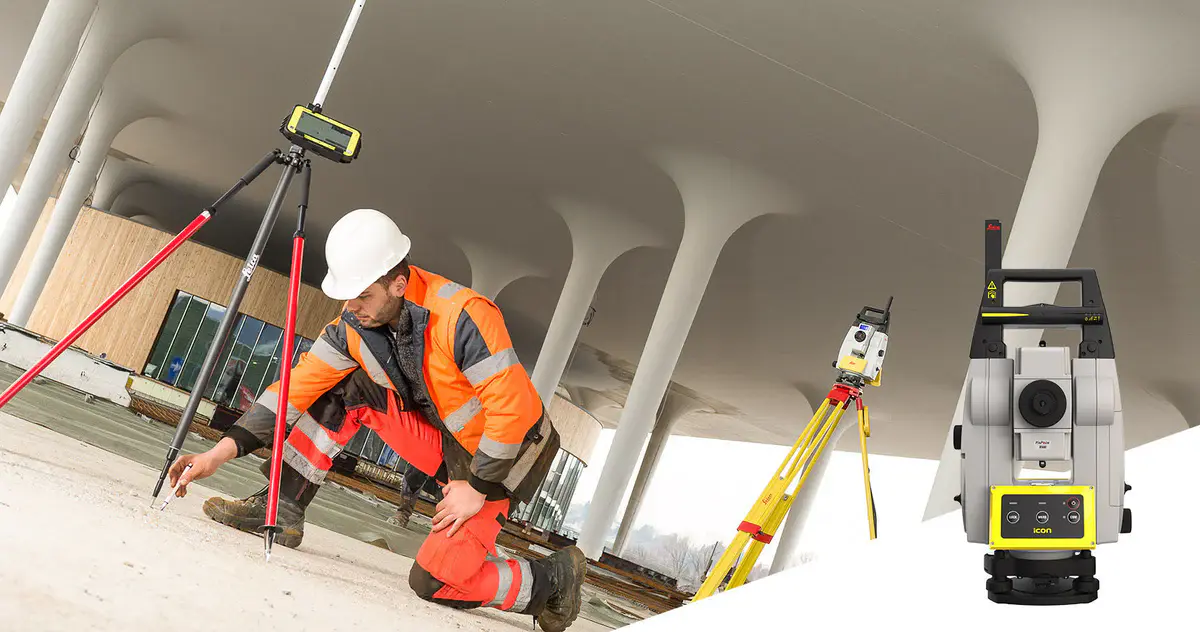
With remote-control features, robotic total stations enable single-user operation or help make the most of a two-person team. Combining distance and angle measurements in a single unit makes these modern theodolites as adaptable as possible.
With both high-accuracy measurements and high consistency across repeated measurements, handling corrections with a robotic unit takes less time. Most Leica iCON models also offer ample options for data integration. This allows you to transfer large data clouds straight to the office, allowing for real-time adjustments as well.
Disadvantages
Keep in mind that robotic total stations cost more than manual models. If you can’t make the most of its time-saving features, it may not work for your construction planning needs. Consider the extra costs of new training requirements, ongoing recalibration services, and software updates.
Robotic models also require greater protection against shocks, drops, and moisture than rugged manual total stations. While some surveying tools operate without a clear line of sight, most robotic total stations still require one. If hidden measurements, such as pipe locations inside the pipe, are needed, make sure you choose an iCON model that supports them.
Top 5 Leica iCON Robotic Total Stations for Construction
With decades of experience designing and producing total stations, Leica produces some of the most reliable robotic models. These Leica systems represent some of the most capable robotic layout solutions available. They work well for construction projects, bringing the correction and automation features needed for challenging site layout and as-built verification routines.
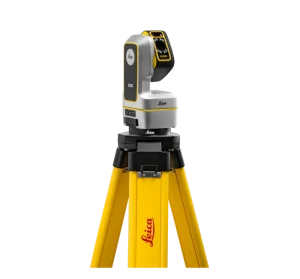
1. Leica iCON iCS50 ($16,999.00)
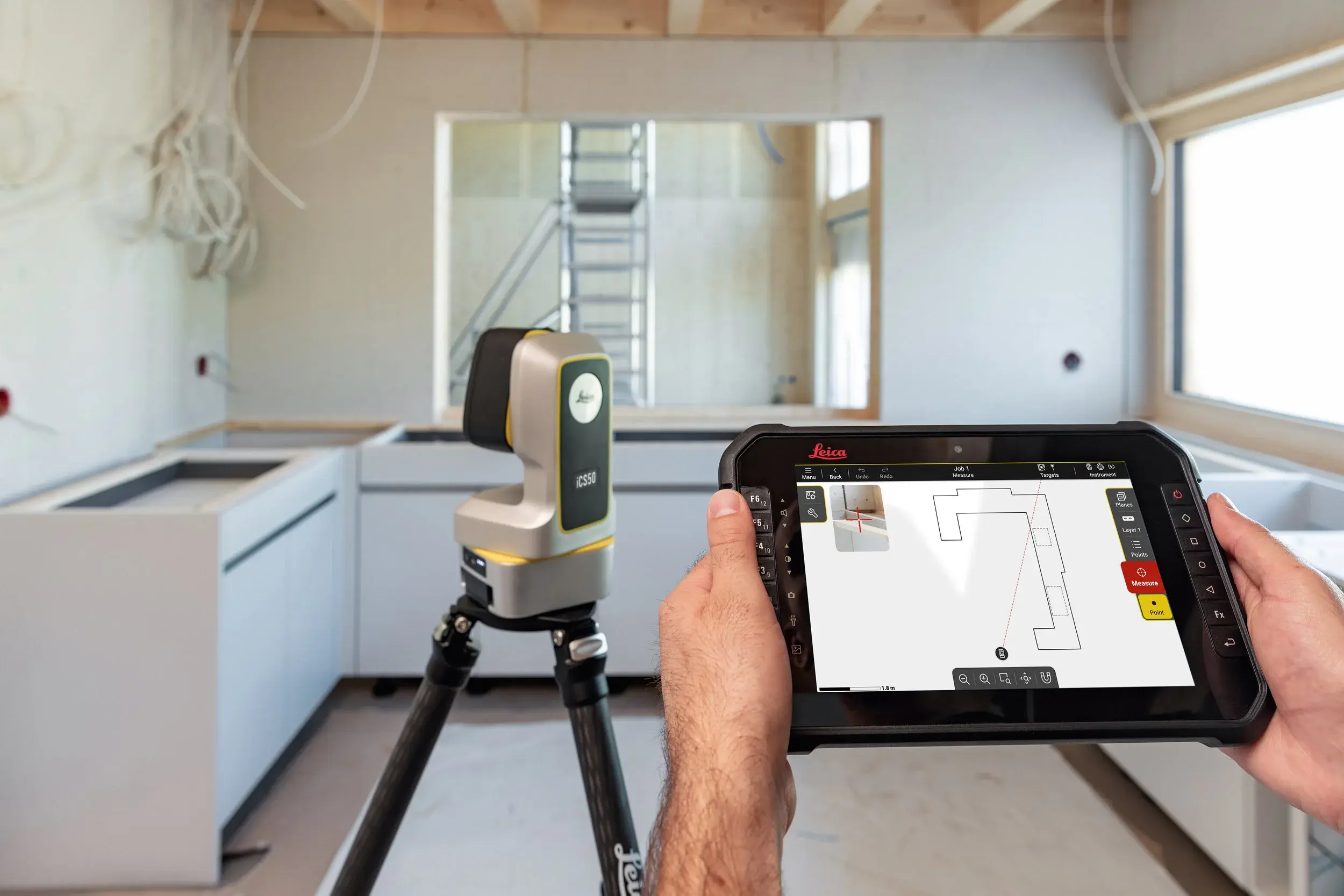
Built for both simple and complex construction layout tasks, the Leica iCON iCS50 is the most affordable option in the range and can handle hidden-point measurements thanks to vPen support.
Features
- High-performance, high-speed direct drive for rapid adjustments
- A dual-camera system to improve documentation with images stored alongside each measured point
- 3D scanning features for BIM demands
- Higher resolution cameras than the entry-level Leica iCON model
Specifications
- Works with the Leica vPole to provide visual-based target tracking, auto-height detection, and automatic tilt compensation
- Control and communicate with native iCON software
- Accuracy of ± 1 mm at 10 m
- Continuous active monitoring to prevent errors from movements
- Direct drives providing speeds of 180°/s
- Fisheye dual cameras for panoramic photographic capture
Pros of the Leica iCS50
- Fast setup
- Auto-levelling in a range of ± 3°
- Wifi connectivity to send images and data to a compatible tablet
- Built-in spotlight for dim conditions
- On-axis camera provides precise aiming
Cons
- More expensive than the entry-level model
- Requires training for software use
- vPole targets require extra care
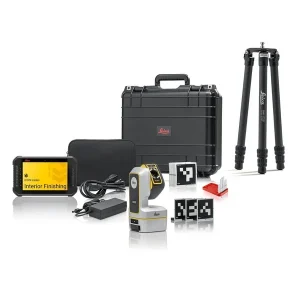
2. Leica iCON iCS20 ($10,999.00)
Designed with basic layout and measurement tasks in mind, the Leica iCS20 is easy to learn and fits the needs of construction companies handling smaller projects. It supports direct line-of-sight work and can be upgraded to provide indirect measurements as well. It’s an affordable, entry-level design that is a great introduction to the productivity boosts that come from robotic total stations.
Features
- Single-camera system
- Automated setup process for quicker activation
- Construction-focused Leica iCON software for efficient workflows
- Fast direct drives
Specifications
- Leica vTargets provide automatic detection for easier relocation
- Angular accuracy of 5”
- Snap-on tripod allows for rapid setup
- IP54 grade protection for indoor & outdoor uses
- Auto-levelling in a range of ± 3°, just like the iCS50
Pros
- Great for making layouts of mechanical, electrical, and plumbing (MEP) systems; templating for material installations; and recording as-built data
- Provides the same one-person operation as other Leica robotic total stations at a lower price point
- Is easy to carry to remote workplaces due to its very compact size
Cons
- Limited to direct line-of-sight work only, unless upgraded for indirect measurements
- Lack of advanced 3D modeling and imaging features
- Bright sunlight can interfere with laser reception
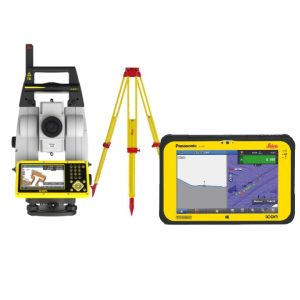
3. Leica iCON iCR80 ($9,999.00)
Powerful enough to tackle the most challenging indirect measurement and BIM tasks, the Leica iCR80 offers premium features, including an industry-leading prism lock. If you need a high-performance robotic total station that keeps up with the demands of a busy construction site, this is your ideal model. It combines advanced precision, optional advanced lock-on features that track moving targets, and long-range Bluetooth connectivity.
Features
- Its ability to reduce interference from other targets in the work area also reduces the need to clear the work site for accurate surveying
- ATRPlus feature helps maximize the station’s time spent locked on target, giving you a higher point-to-point layout speed
- PowerSearch prism search sets industry records
Specifications
- Long-range Bluetooth features for connectivity at up to 400 meters
- Fast transfer of control from total station to pole
- Fastest re-lock procedure when line of sight is interrupted
- Compatible with a wide range of iCON field controllers
Pros
- Setup Pilot app provides a quick and easy setup process
- Handles as-built documentation and verification tasks in a hurry and on-site
- Works to accelerate layout with the use of true design data, including both 2D and 3D BIM models
- Ensures fewer mistakes, less downtime, faster setup, and higher accuracy than any other Leica robotic total station
Cons
- Highest cost of all the Leica iCON models, making it a good fit for only the biggest and most demanding projects
- iCON software limitations may not meet the needs of advanced users who need in-depth customization
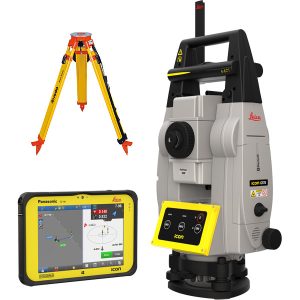
4. Leica iCON iCR70 ($9,999.00)
If you need advanced features but have a limited budget, the Leica iCR70 is the perfect mid-range robotic total station for general layout tasks. It’s helpful for fully automating processes like layout routines involving multiple points on floors or ceilings, setting lines for pipe wall penetrations, and more.
You can also visualize binding-layer data, such as pipe inserts and cut-outs. While it may not have the advanced prism lock of the iCR80, it still has basic versions of many of the same features.
Features
- Fast prism search with the SpeedSearch system and basic ATR
- Capable of producing CAD-to-field and BIM 3D models
- Works with iCON Build software for intuitive operation with minimal training
Specifications
- Two angle accuracies available: 2″ (0.6 mgon) or 5″ (1.5 mgon)
- 4-button built-in keyboard for easy operation
- Transfer data via Bluetooth, Wifi, or a USB device
- Weighs just 5 lbs to reduce fatigue throughout a long work day
Pros
- Productivity boost speeds complex metal and concrete layout steps
- Handles 3D model information in the field without delay, creating stakeout points directly from the model
- Offers optional upgrades including 2-face measurements to expand your abilities as your company grows
Cons
- Can struggle with reflective surfaces and bright sunlight
- Limited customization options, especially with software
5. Leica AP20 AutoPole
Robotic total stations are great at improving point accuracy and productivity compared to manual models. However, they’re still limited in speed and require corrections based on the pole used to reflect visual and laser signals back to the station. That’s where the Leica AP20 AutoPole comes in.
Features
- Tilt adjustment to eliminate the need to find the space for a straight pole measurement in tight areas
- Quick re-establishment of lost line-of-sight
- Connect only to your total station, even if multiple surveyors are working on the same busy construction site
- Automatic height readings for faster results without sacrificing accuracy
Specifications
- TargetID feature automates searching, identifying, and locking on targets
- Compatible with a wide range of Leica total stations, not just robotic models
- Works with both Leica Captivate and Infinity software
Pros
- Works for a wide range of layout and verification tasks, making it valuable to construction and engineering firms of all sizes
- Adapts to challenging construction sites with minimal adjustments or manual work required
- Allows surveyors to stay more aware of risk factors, such as moving vehicles or trip hazards
Cons
- More expensive than standard measurement poles
- Only works with certain Leica total stations
- Requires more training to use
How Robotic Total Stations Improve Construction Efficiency
Robotic total stations automate much of the process of setting up, locking onto targets, and compensating for factors like refraction and signal interference. When paired with a modern measurement pole from Leica, the efficiency of your surveying workflows could make all the difference in staying within a tight construction schedule.
Choosing the Right Leica Construction Layout System
Ready to find the Leica construction total station that most suits your projects? Turn to Califf Surveying for Leica equipment advice any time you need it. Here at Califf Surveying, we help contractors identify the right Leica surveying equipment based on project requirements, accuracy needs, and operational workflows. Don’t make the decision alone when our expertise can ensure you’re happy with your choice in the long run.
Construction firms seeking reliable layout technology can explore the Leica iCON systems available through Califf Surveying.